
How to Reduce Wasted Ad Spend
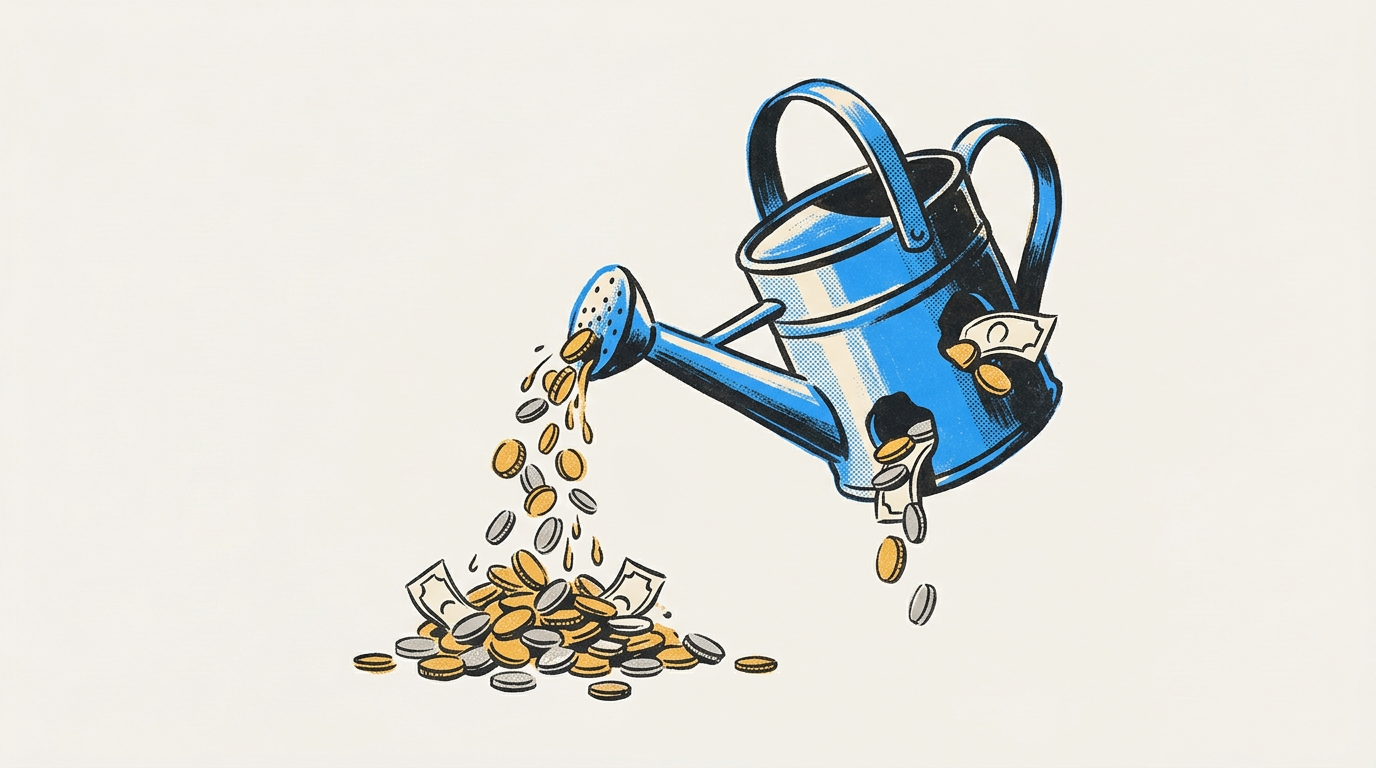
Most ad accounts are wasting 20-40% of their budget on campaigns that don’t work. Not because the marketer is bad at their job, but because it’s hard to catch every inefficiency when you’re managing multiple campaigns, platforms, and objectives.
Wasted ad spend comes in different forms. Some campaigns are obviously broken. Others are slowly declining but still look acceptable in weekly reports. Some are performing fine but could be performing better with small adjustments.
Here’s how to identify wasted spend in your account and fix it before it adds up.
Campaigns with declining ROAS that are still running
The most common source of wasted spend is campaigns that used to work but don’t anymore. They’re not broken enough to pause immediately, but they’re declining week over week and no one’s noticed yet.
How to find it: Look for campaigns where ROAS has dropped 30% or more over the past 14 days compared to the previous period. Filter by campaigns spending over $500/month so you’re focused on material budget.
Why it happens: Audience fatigue, seasonal changes, competitor activity, or creative that’s been running too long. The campaign isn’t broken. It’s just not working as well as it was.
How to fix it: First, check if you can refresh the creative or adjust targeting to re-engage the audience. If performance doesn’t improve within 3-5 days, pause the campaign and reallocate that budget to better performers.
Example: A campaign spending $3,000/month had a ROAS of 4.5x in January. By mid-February, it had declined to 2.8x. The marketer didn’t notice because they were comparing week-over-week, and the decline was gradual. Pausing the campaign and shifting that budget saved $600/month in wasted spend.
Audience overlap causing you to bid against yourself
If you’re running multiple campaigns targeting the same or similar audiences, you might be competing with yourself in the ad auction. Meta’s algorithm shows your ads to the same people from different campaigns, and you end up bidding against yourself and driving up costs.
How to find it: In Meta Ads Manager, use the Audience Overlap tool under Audiences. It shows you which audiences have significant overlap. Anything over 30% overlap is a problem.
Why it happens: You created audiences for different campaigns without checking if they overlap. “Women 25-34 interested in fitness” and “Women 25-34 who engaged with your content” probably have a lot of the same people.
How to fix it: Consolidate overlapping audiences into a single campaign with multiple ad sets, or use Meta’s Advantage+ audience targeting to let the algorithm optimize without creating artificial competition.
Example: An e-commerce brand had three campaigns targeting variations of “women interested in yoga.” The audiences overlapped by 60%. Their cost per click was 30% higher than industry benchmarks because they were bidding against themselves. Consolidating into one campaign with broader targeting dropped CPC by 22%.
Ads running outside optimal time windows
Some products and services perform better at certain times of day or days of the week. If you’re running ads 24/7 without checking when conversions happen, you’re wasting budget on hours that don’t convert well.
How to find it: Check the Breakdown menu in Meta Ads Manager and view performance by hour of the day and day of the week. Look for patterns where conversion rate is significantly lower during specific time windows.
Why it happens: Default campaign settings run ads continuously. Most marketers don’t think to check time-of-day performance unless there’s an obvious reason (like a brick-and-mortar store with specific hours).
How to fix it: Use ad scheduling to pause ads during low-performing hours. If you sell B2B software, you probably don’t need ads running at 3am when your target audience is asleep.
Example: A SaaS company found that 80% of their conversions happened Monday-Friday between 9am-6pm, but ads were running 24/7. Pausing ads on nights and weekends reduced spend by 35% with no drop in conversions.
Creative fatigue from running the same ad too long
Ad creative gets stale. People see the same image or video multiple times and stop engaging. Your click-through rate drops, your cost per click increases, and your ROAS declines.
How to find it: Look for ads that have been running for 60+ days and have a declining CTR. Check the Frequency metric—if people are seeing your ad 4+ times on average, they’re probably fatigued.
Why it happens: You launched a campaign, it worked, and you left it running without refreshing the creative. This is especially common with retargeting campaigns where the same audience sees the same ads repeatedly.
How to fix it: Rotate new creative every 30-45 days, even if the current creative is still performing. This prevents fatigue before it becomes a problem. For retargeting, refresh creative every 2-3 weeks.
Example: A campaign had a CTR of 2.4% in its first month. By month three, CTR had dropped to 0.9% and CPA had doubled. The marketer swapped in new creative with the same messaging but different visuals. CTR jumped back to 2.1% within a week.
Targeting that’s too broad or too narrow
Broad targeting wastes budget on people who are unlikely to convert. Narrow targeting limits your reach so much that you can’t spend your budget efficiently, and costs go up due to limited inventory.
How to find it: Check your campaign’s estimated audience size in Meta Ads Manager. If it’s under 50,000 people, you might be too narrow. If it’s over 10 million and your product has a specific target market, you might be too broad.
Why it happens: Broad targeting happens when you’re trying to reach as many people as possible without considering who’s likely to buy. Narrow targeting happens when you layer too many interests or demographics and choke off your audience.
How to fix it: Start with Meta’s Advantage+ targeting and let the algorithm find your audience. If you prefer manual targeting, aim for an audience size of 500,000-2 million for most campaigns. Test broader audiences with strong creative rather than narrow audiences with weak creative.
Example: A campaign was targeting “women 25-34 interested in yoga AND meditation AND wellness AND healthy eating.” The audience was 40,000 people, and costs were high due to limited reach. Simplifying to “women 25-34 interested in wellness” expanded the audience to 2 million and dropped CPA by 35% because the algorithm had more room to optimize.
Manual monitoring vs. automated monitoring
You can catch most of these issues manually if you review campaign performance daily, check audience overlap weekly, analyze time-of-day data monthly, and monitor creative fatigue constantly. That’s 5-10 hours per week minimum.
Or you can use AI marketing automation to monitor for you. The AI watches for declining performance, checks audience overlap, tracks when conversions happen, and flags creative fatigue before it costs you money. You get alerts when something needs your attention and spend your time fixing problems instead of looking for them.
Manual monitoring works if you manage one or two simple campaigns. Automated monitoring makes sense if you’re managing multiple campaigns, platforms, or clients.
Setting up prevention
The best way to reduce wasted ad spend is to prevent it in the first place.
Set up performance alerts: Get notified when ROAS drops below a threshold, when CPA increases by a certain percentage, or when a campaign’s performance deviates from its baseline. Catch problems early instead of discovering them in weekly reports.
Use budget caps: Set daily and lifetime budget caps so a misconfigured campaign can’t drain your entire account overnight.
Create performance rules: Auto-pause campaigns if CPA exceeds a certain amount, if ROAS falls below a threshold, or if click-through rate drops significantly. This stops the bleeding while you investigate.
Review high-spend campaigns weekly: Prioritize monitoring campaigns that spend the most money. A 10% improvement on a $10,000/month campaign is more valuable than a 50% improvement on a $500/month campaign.
Wasted ad spend compounds quietly. A campaign losing $20/day doesn’t feel urgent, but over a month that’s $600. Over a quarter, it’s $1,800. Across multiple campaigns, it adds up fast.
The goal isn’t to never waste money. Some experimentation and inefficiency is expected. The goal is to catch waste quickly before it becomes expensive and redirect that budget to campaigns that work.
Find out how much you’re wasting
Get a free account analysis →